

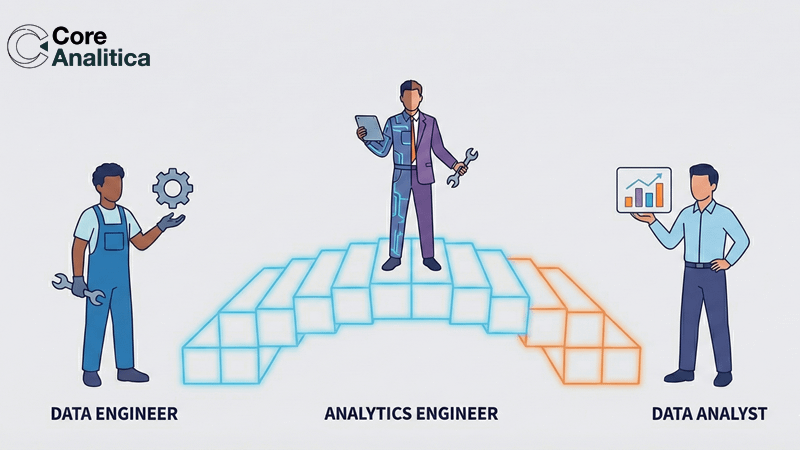
The Rise of the “Analytics Engineer”: The Most Important Role You Aren’t Hiring
For a long time, data teams were composed of two main characters who, quite frankly, didn’t understand each other very well.
On one side, you had the Data Engineer. The technical plumber. They wrote Python and Scala code. They cared about pipelines, APIs, and infrastructure reliability. They generally didn’t know (or care) what “Gross Margin” actually meant or how the marketing team defined a “Lead.”
On the other side, you had the Data Analyst. The business face. They wrote SQL and lived in Power BI or Tableau. They knew the business metrics inside out, but they lacked software engineering habits. They didn’t use version control, they didn’t write automated tests, and their SQL code was often a messy web of copy-pasted logic.
This gap created a massive problem. Analysts were building fragile, un-maintainable logic inside their dashboards. Engineers were building robust pipelines that delivered data in formats the analysts couldn’t actually use. Enter the Analytics Engineer.
Bridging the Gap
The Analytics Engineer is a relatively new, hybrid role that sits right in the middle of this divide, and it is quickly becoming the MVP of modern data teams.
- They speak SQL as their primary language (like an analyst).
- But they apply Software Engineering rigor to that SQL (like an engineer).
They use tools (like dbt or the new notebook capabilities in Fabric) to build clean, tested, documented data models. They are responsible for transforming raw, messy data into the “Gold Standard” tables that the rest of the business uses.
Why You Need Them
Without Analytics Engineers, you have “Logic Sprawl.” The logic for calculating “Revenue” lives inside a Tableau workbook, and a different version lives in a Power BI report, and a third version lives in an Excel sheet. And they never match.
The Analytics Engineer centralizes that logic in the code base. They define “Revenue” once, test it, and publish it. They are the librarians of your data logic. If your data team feels disconnected—if the engineers don’t understand the business and the analysts keep breaking the database—you don’t need to buy a new software tool. You need to hire an Analytics Engineer to build the bridge.